
Summer 2025 | A CIRCULAR PATIO (work of art!)
From All Pro Construction & Restoration
1. Excavation and Grading
The first step would be to excavate the area where the patio and wall will be built. This involves removing topsoil and any organic material to a specified depth. The ground is then graded to ensure a proper slope away from the home and the retaining wall, which is essential for drainage and preventing water from pooling. The use of wheelbarrows visible in the background suggests that manual labor was used for this stage, with the soil and debris likely being moved off-site or to a different part of the property.
2. Base Preparation
After excavation, a compacted aggregate base is laid down. This material, often crushed stone or gravel, provides a stable, load-bearing foundation for the pavers. It’s spread in layers and then compacted using a plate compactor to ensure it is dense and level. A thin layer of sand is then typically spread over the compacted base to provide a bedding layer for the pavers, allowing for fine-tuning of their position.
3. Wall Construction
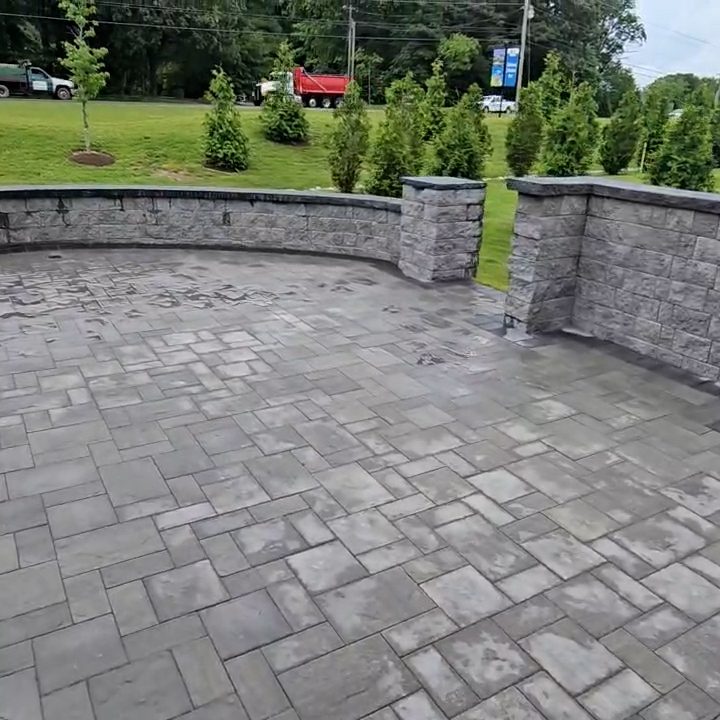
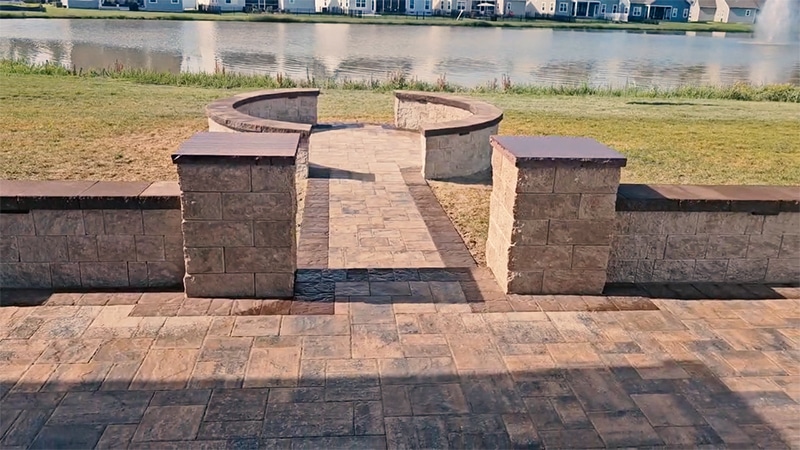
The retaining walls and the circular seating wall are built before the pavers are laid. These walls are constructed using interlocking concrete blocks. The first course of blocks is critical; it is carefully leveled and placed on a stable footing, often a compacted trench of gravel. Each subsequent course is then stacked on top, with the blocks interlocked to provide stability. The photo shows capstones being placed on top of the walls, which provides a finished, aesthetic look and protects the wall from the elements.
4. Paver Installation
Once the walls are in place, the patio pavers are installed. This is a meticulous process where each paver is laid by hand in a specific pattern. The image shows two different paver styles or colors—a central pathway and a wider patio area—which would have required a specific layout and cutting of the pavers to achieve the desired curved and straight lines. The two workers in the background are likely in the final stages of this process, possibly making cuts or adjustments to the last pavers to fit the shape of the circular wall.
5. Joint Sand and Compaction
After all the pavers are in place, the joints between them are filled with sand. This sand, often called joint sand or polymeric sand, locks the pavers in place and prevents weeds from growing. The entire surface is then compacted with a plate compactor. This vibration settles the pavers into the bedding sand and helps the joint sand fill the gaps completely. The compaction process ensures a level and stable surface that can withstand foot traffic and weather over time.
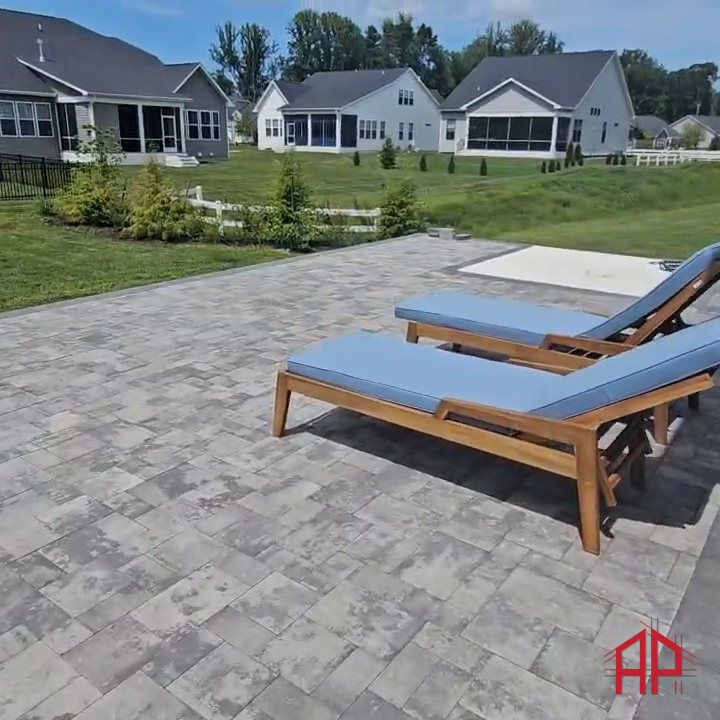
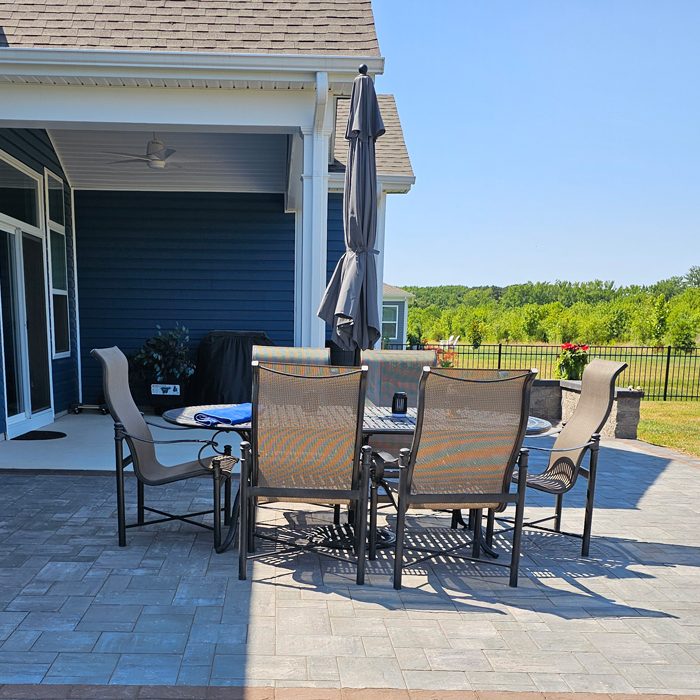
This new patio is constructed with interlocking concrete pavers. The pavers have a multi-toned, rustic look with shades of gray, tan, and brown, laid in a pattern that creates a sense of texture and visual interest. The patio extends from the back of the house, providing a large, level surface for outdoor living and recreation.
Total Estimated Timeline: Approximately 6 weeks from initial consultation to completion, with the actual construction phase taking around 2 to 4 weeks.
-
Expanded Usable Living Space: The new patio effectively extends the home’s functional living area into the backyard. It creates a dedicated space for dining, entertaining, and relaxation, which is highly appealing to potential buyers.
-
Aesthetic Appeal and Curb Appeal: The use of attractive, multi-toned pavers and the custom-built stone enclosure for the grill give the space a high-end, finished look. This enhances the overall aesthetic of the backyard, boosting both its visual appeal and the home’s curb appeal.
-
Modern and Desirable Features: Outdoor kitchens and dedicated grilling areas are very popular features in modern home design. This project capitalizes on that trend, making the home more attractive to a wider pool of buyers who are looking for move-in-ready outdoor spaces.
-
Durability and Low Maintenance: Paver patios are known for their durability and low maintenance requirements compared to other materials like wood decks. This is a strong selling point, as it signals a smart, long-lasting investment to a future homeowner.
-
ROI Potential: While the exact return on investment (ROI) can vary widely based on location and the local real estate market, studies often show that projects like new patios and outdoor kitchens have a good to excellent ROI. They can often recoup a significant portion, or even all, of their cost, and sometimes more, by making the home more competitive and desirable.